Risk Control for Agent Payment
FluxA provides risk control solutions for the tomorrow's AI, reducing the risk of participating in agent commerce.
Risk Paradigm Shift in Agent Payments
From traditional binary risk model to agent payment ternary risk model
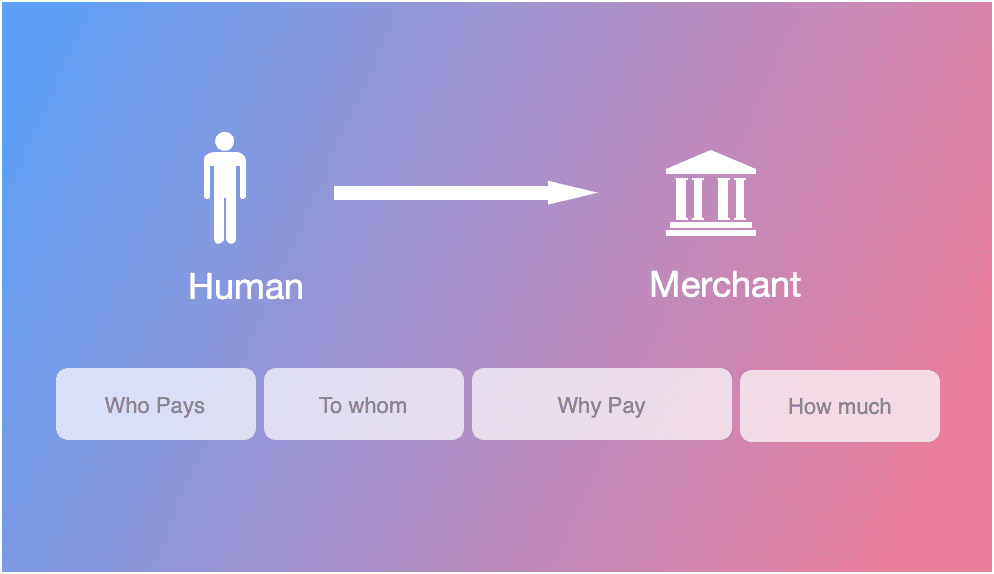
Binary risk model in traditional payments
Focus on the risks between users and merchants, and build risk controls around keeping user payments safe.
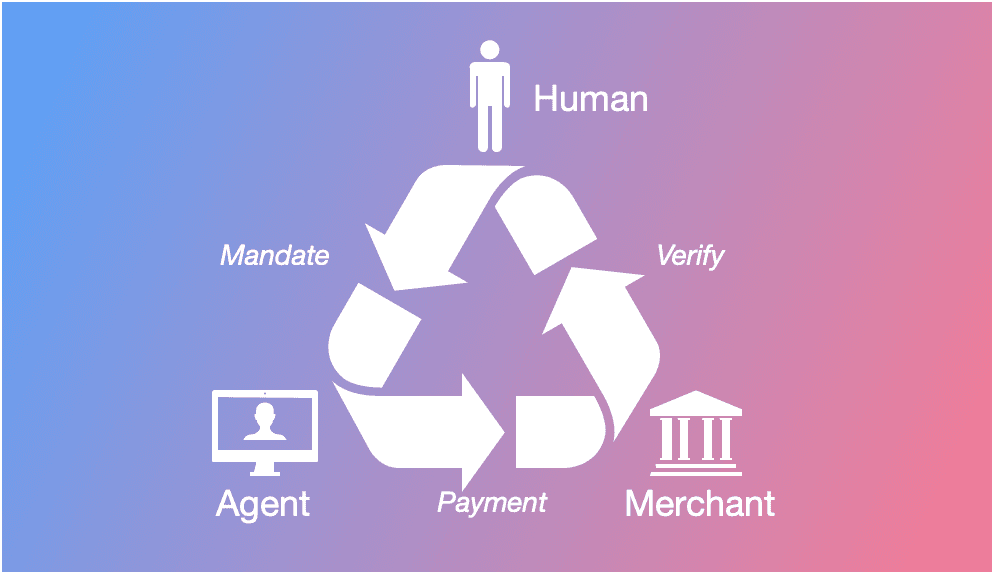
Ternary risk model in agent payments
Focus on the risks among users, agents, and merchants, and identify illegal transactions based on the user's mandate.
Payment Risk Changes
Account takeover
Previously: detecting payments not made by the real user
Now: humans authorizing non-humans to pay
Fraud
Previously: preventing humans from being tricked into making payments
Now: preventing AI agents from making unauthorized payments due to reasoning errors or attacks
AML
Previously: watching for high-frequency, low-value, multi-counterparty, or machine-like patterns
Now: these patterns are normal
Risk Model Evolution in Agent Payments
Binary Model Limitations
Risk judged only between human and merchant. User and agent behaviors are coupled on a single account, causing attribution issues
Behavioral Ambiguity
Human and agent actions operate on the same account, making them indistinguishable and hard to attribute
Hard to Prove
In the agent's execution steps, there is no way to prove that a human was present or involved.
No KYA for Agents
Traditional KYC/KYB do not cover agents; agents lack independent KYA
Ambiguous Judgement
Unclear responsibility allocation among user/agent/merchant; boundaries for indemnity/compensation are hard to define
FluxA Restores a Complete Ternary Model
Build a mutually verifiable risk control structure between humans, agents, and merchants.
Human <> Agent
Authorization & Intent Consistency Risk
What the user approved vs. what the agent intends
Agent <> Merchant
Execution & Invocation‑Chain Risk
Correctness and provenance of the agent's tool/API actions
Human <> Merchant
Traditional Financial Risk
Settlement correctness, amounts/fees/payee verification
FluxA Native Risk Control Modules
Agent Identity Graph
Bring together identity, credentials, devices and tools, turn agents from black-box executors into attributable, auditable, and constrained payment actors for next-generation risk control.
- • Behavioral fingerprints
- • Call‑chain lineage
- • Historical credit
- • Sub‑agent relationships
- • ...
Intent Mandate Semantics
A verifiable system of human intent and authorization proofs for AI payments and agent risk control.
- • Multi‑level authorization
- • Intent consistency validation
- • Prompt‑injection recognition
- • Intent vs Payment semantic completeness verification
Task‑chain Risk Enforcement
Not just enforcing risk control at the moment of payment, but continuously across the agent’s entire task execution chain.
- • Task DAG with reviewable playback
- • Keep all steps aligned with user intent
- • Block immediately on behavior drift
- • Enable post-hoc audit and attribution
Model Drift & AI‑Specific Fraud
Control payment risks caused by model hallucinations and attacks targeting AI.
- • Hallucination‑induced fraud
- • Prompt/context attacks
- • Data‑poisoning causing decision drift
- • Long‑horizon drift monitoring
Regulatory Readiness
Infrastructure for future regulation: explainable, attributable, and accountable.
Request Demo